 Add to Chrome
 Add to Firefox
 Add to Edge
Representation Forcing for Bottleneck-Free Unified Multimodal Models
May 29, 2026
Unified multimodal models (UMMs) aim to handle perception and generation in a single model. Yet existing UMMs still rely on a frozen, separately pretrained VAE for image generation, imposing a structural bottleneck. Naively removing it introduces a quality gap, as the model must learn both high-level structure and low-level details from raw pixels. In this paper, we propose Representation Forcing (RF), a technique that closes this gap by making representation prediction a native capability of the model. Concretely, RF forces the decoder to autoregressively predict visual representations as intermediate tokens before pixels; these tokens then stay in context to guide pixel diffusion within the same backbone. By turning representations from perception outputs into generation targets, RF eliminates the need for any external generative latent space. We find that RF benefits both understanding and generation. On image generation, our pixel-space model with RF matches state-of-the-art VAE-based unified models. On image understanding, pixel-space RF generally outperforms its VAE-based variant. Together, these results offer an effective step toward end-to-end, bottleneck-free UMMs.

Generative Auto-Bidding with Unified Modeling and Exploration
May 19, 2026Automated bidding is central to modern digital advertising. Early rule-based methods lacked adaptability, while subsequent Reinforcement Learning approaches modeled bidding as a Markov Decision Process but struggled with long-term dependencies. Recent generative models show promise, yet they lack explicit mechanisms to balance exploration and safety, relying solely on action perturbations or trajectory guidance without a safety fallback. This results in inefficient exploration and elevated financial risk for advertising platforms. To address this gap, we propose GUIDE (Generative Auto-Bidding with Unified Modeling and Exploration), a framework that synergistically integrates directed exploration with a safe fallback mechanism. GUIDE employs a Decision Transformer (DT) to jointly model historical bidding actions and environmental state transitions. A Q-value module guides the DT's exploration via regularization constraints, while an Inverse Dynamics Module (IDM) leverages DT-predicted future states to infer robust, behaviorally consistent actions as a safe policy fallback. The Q-value module then adaptively selects the final action between these two options, balancing exploration and safety. Together, these components form an integrated "explore-safeguard-select" pipeline that unifies efficiency and safety. We conduct extensive experiments on public datasets, in simulated auction environments, and through large-scale online deployment on Taobao, a leading Chinese advertising platform. Results show GUIDE consistently outperforms state-of-the-art baselines across all scenarios. In real-world deployment, GUIDE achieves notable gains: +4.10% ad GMV, +1.40% ad clicks, +1.66% ad cost, and +3.52% ad ROI, demonstrating its effectiveness and strong industrial applicability.
Context Unrolling in Omni Models
Apr 23, 2026We present Omni, a unified multimodal model natively trained on diverse modalities, including text, images, videos, 3D geometry, and hidden representations. We find that such training enables Context Unrolling, where the model explicitly reasons across multiple modal representations before producing predictions. This process enables the model to aggregate complementary information across heterogeneous modalities, facilitating a more faithful approximation of the shared multimodal knowledge manifold and improving downstream reasoning fidelity. As a result, Omni achieves strong performance on both multimodal generation and understanding benchmarks, while demonstrating advanced multimodal reasoning capabilities, including in-context generation of text, image, video, and 3D geometry.
Seedance 1.5 pro: A Native Audio-Visual Joint Generation Foundation Model
Dec 23, 2025Recent strides in video generation have paved the way for unified audio-visual generation. In this work, we present Seedance 1.5 pro, a foundational model engineered specifically for native, joint audio-video generation. Leveraging a dual-branch Diffusion Transformer architecture, the model integrates a cross-modal joint module with a specialized multi-stage data pipeline, achieving exceptional audio-visual synchronization and superior generation quality. To ensure practical utility, we implement meticulous post-training optimizations, including Supervised Fine-Tuning (SFT) on high-quality datasets and Reinforcement Learning from Human Feedback (RLHF) with multi-dimensional reward models. Furthermore, we introduce an acceleration framework that boosts inference speed by over 10X. Seedance 1.5 pro distinguishes itself through precise multilingual and dialect lip-syncing, dynamic cinematic camera control, and enhanced narrative coherence, positioning it as a robust engine for professional-grade content creation. Seedance 1.5 pro is now accessible on Volcano Engine at https://console.volcengine.com/ark/region:ark+cn-beijing/experience/vision?type=GenVideo.
Seedance 1.0: Exploring the Boundaries of Video Generation Models
Jun 10, 2025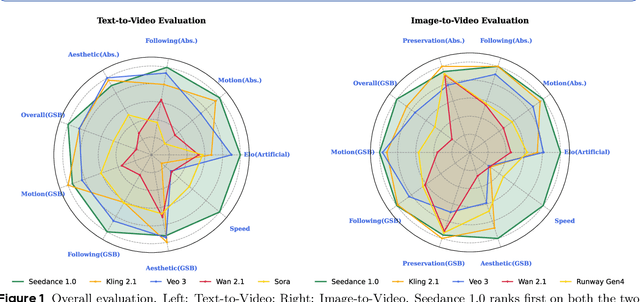
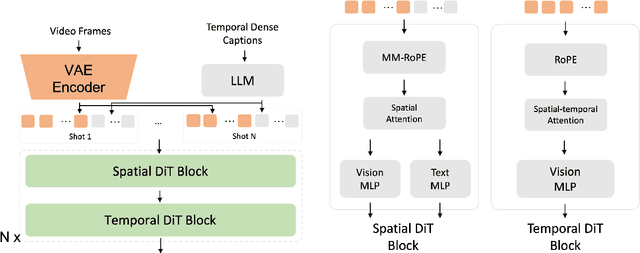
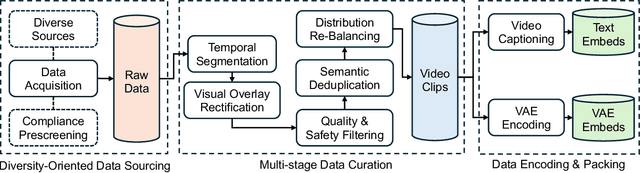
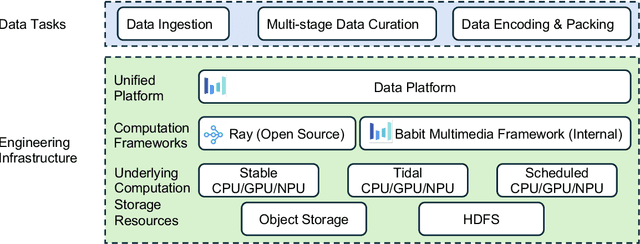
Notable breakthroughs in diffusion modeling have propelled rapid improvements in video generation, yet current foundational model still face critical challenges in simultaneously balancing prompt following, motion plausibility, and visual quality. In this report, we introduce Seedance 1.0, a high-performance and inference-efficient video foundation generation model that integrates several core technical improvements: (i) multi-source data curation augmented with precision and meaningful video captioning, enabling comprehensive learning across diverse scenarios; (ii) an efficient architecture design with proposed training paradigm, which allows for natively supporting multi-shot generation and jointly learning of both text-to-video and image-to-video tasks. (iii) carefully-optimized post-training approaches leveraging fine-grained supervised fine-tuning, and video-specific RLHF with multi-dimensional reward mechanisms for comprehensive performance improvements; (iv) excellent model acceleration achieving ~10x inference speedup through multi-stage distillation strategies and system-level optimizations. Seedance 1.0 can generate a 5-second video at 1080p resolution only with 41.4 seconds (NVIDIA-L20). Compared to state-of-the-art video generation models, Seedance 1.0 stands out with high-quality and fast video generation having superior spatiotemporal fluidity with structural stability, precise instruction adherence in complex multi-subject contexts, native multi-shot narrative coherence with consistent subject representation.
Seaweed-7B: Cost-Effective Training of Video Generation Foundation Model
Apr 11, 2025
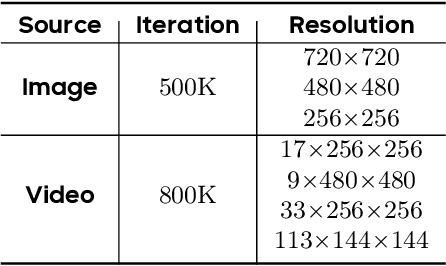
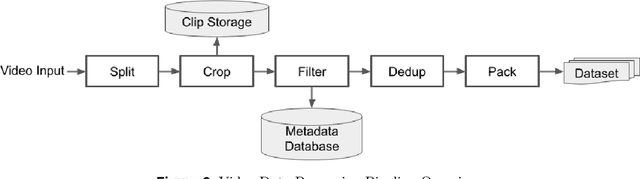

This technical report presents a cost-efficient strategy for training a video generation foundation model. We present a mid-sized research model with approximately 7 billion parameters (7B) called Seaweed-7B trained from scratch using 665,000 H100 GPU hours. Despite being trained with moderate computational resources, Seaweed-7B demonstrates highly competitive performance compared to contemporary video generation models of much larger size. Design choices are especially crucial in a resource-constrained setting. This technical report highlights the key design decisions that enhance the performance of the medium-sized diffusion model. Empirically, we make two observations: (1) Seaweed-7B achieves performance comparable to, or even surpasses, larger models trained on substantially greater GPU resources, and (2) our model, which exhibits strong generalization ability, can be effectively adapted across a wide range of downstream applications either by lightweight fine-tuning or continue training. See the project page at https://seaweed.video/
VecAug: Unveiling Camouflaged Frauds with Cohort Augmentation for Enhanced Detection
Aug 01, 2024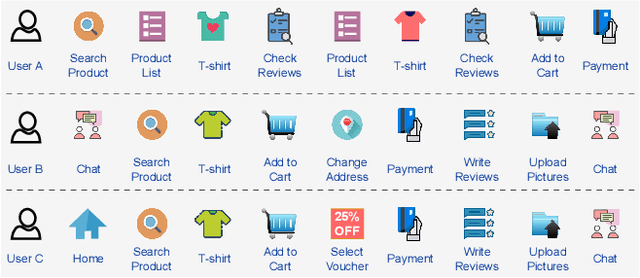
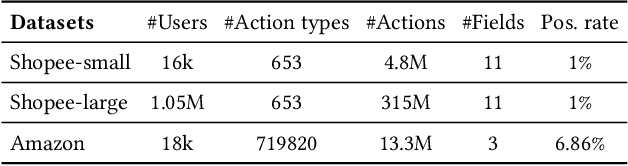
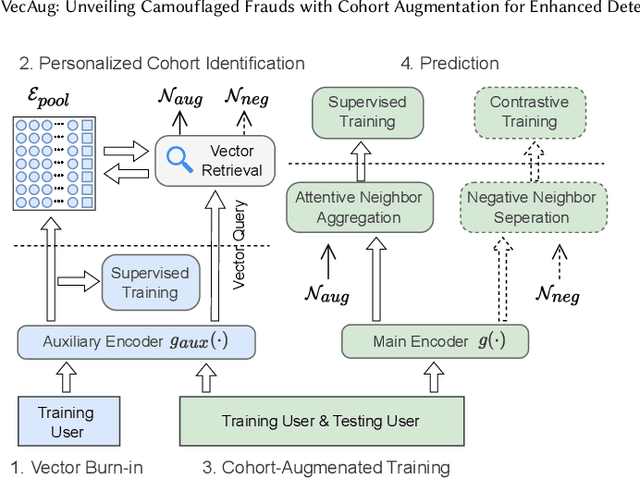

Fraud detection presents a challenging task characterized by ever-evolving fraud patterns and scarce labeled data. Existing methods predominantly rely on graph-based or sequence-based approaches. While graph-based approaches connect users through shared entities to capture structural information, they remain vulnerable to fraudsters who can disrupt or manipulate these connections. In contrast, sequence-based approaches analyze users' behavioral patterns, offering robustness against tampering but overlooking the interactions between similar users. Inspired by cohort analysis in retention and healthcare, this paper introduces VecAug, a novel cohort-augmented learning framework that addresses these challenges by enhancing the representation learning of target users with personalized cohort information. To this end, we first propose a vector burn-in technique for automatic cohort identification, which retrieves a task-specific cohort for each target user. Then, to fully exploit the cohort information, we introduce an attentive cohort aggregation technique for augmenting target user representations. To improve the robustness of such cohort augmentation, we also propose a novel label-aware cohort neighbor separation mechanism to distance negative cohort neighbors and calibrate the aggregated cohort information. By integrating this cohort information with target user representations, VecAug enhances the modeling capacity and generalization capabilities of the model to be augmented. Our framework is flexible and can be seamlessly integrated with existing fraud detection models. We deploy our framework on e-commerce platforms and evaluate it on three fraud detection datasets, and results show that VecAug improves the detection performance of base models by up to 2.48\% in AUC and 22.5\% in R@P$_{0.9}$, outperforming state-of-the-art methods significantly.
Unveiling the Tapestry of Consistency in Large Vision-Language Models
May 23, 2024Large vision-language models (LVLMs) have recently achieved rapid progress, exhibiting great perception and reasoning abilities concerning visual information. However, when faced with prompts in different sizes of solution spaces, LVLMs fail to always give consistent answers regarding the same knowledge point. This inconsistency of answers between different solution spaces is prevalent in LVLMs and erodes trust. To this end, we provide a multi-modal benchmark ConBench, to intuitively analyze how LVLMs perform when the solution space of a prompt revolves around a knowledge point. Based on the ConBench tool, we are the first to reveal the tapestry and get the following findings: (1) In the discriminate realm, the larger the solution space of the prompt, the lower the accuracy of the answers. (2) Establish the relationship between the discriminative and generative realms: the accuracy of the discriminative question type exhibits a strong positive correlation with its Consistency with the caption. (3) Compared to open-source models, closed-source models exhibit a pronounced bias advantage in terms of Consistency. Eventually, we ameliorate the consistency of LVLMs by trigger-based diagnostic refinement, indirectly improving the performance of their caption. We hope this paper will accelerate the research community in better evaluating their models and encourage future advancements in the consistency domain.
Transductive Learning for Unsupervised Text Style Transfer
Sep 16, 2021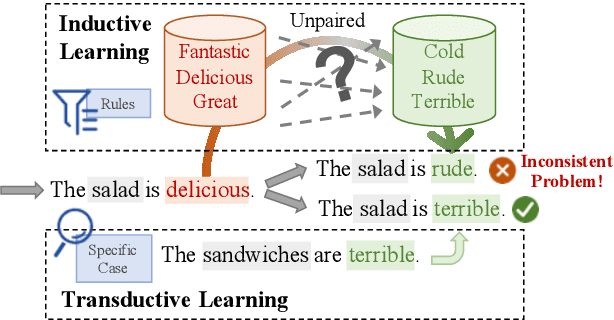
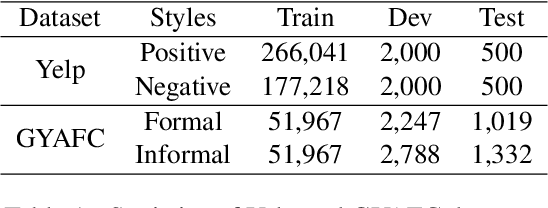
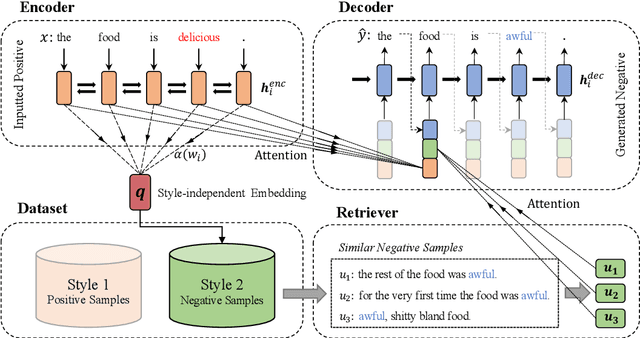
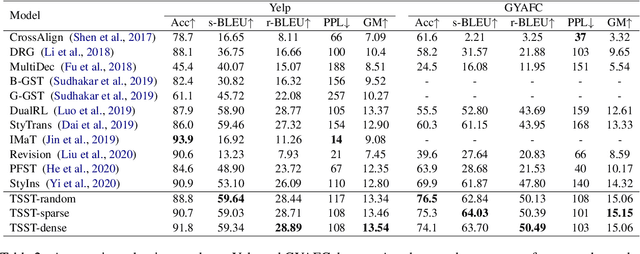
Unsupervised style transfer models are mainly based on an inductive learning approach, which represents the style as embeddings, decoder parameters, or discriminator parameters and directly applies these general rules to the test cases. However, the lacking of parallel corpus hinders the ability of these inductive learning methods on this task. As a result, it is likely to cause severe inconsistent style expressions, like `the salad is rude`. To tackle this problem, we propose a novel transductive learning approach in this paper, based on a retrieval-based context-aware style representation. Specifically, an attentional encoder-decoder with a retriever framework is utilized. It involves top-K relevant sentences in the target style in the transfer process. In this way, we can learn a context-aware style embedding to alleviate the above inconsistency problem. In this paper, both sparse (BM25) and dense retrieval functions (MIPS) are used, and two objective functions are designed to facilitate joint learning. Experimental results show that our method outperforms several strong baselines. The proposed transductive learning approach is general and effective to the task of unsupervised style transfer, and we will apply it to the other two typical methods in the future.
Predictions of short-term driving intention using recurrent neural network on sequential data
Mar 28, 2018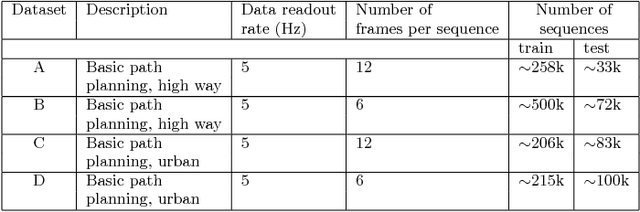
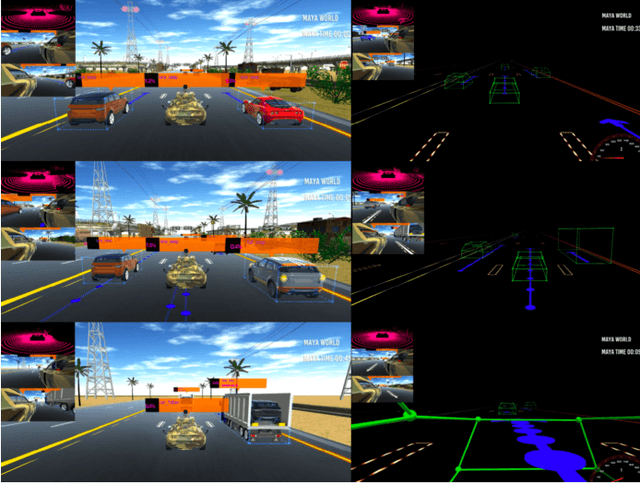
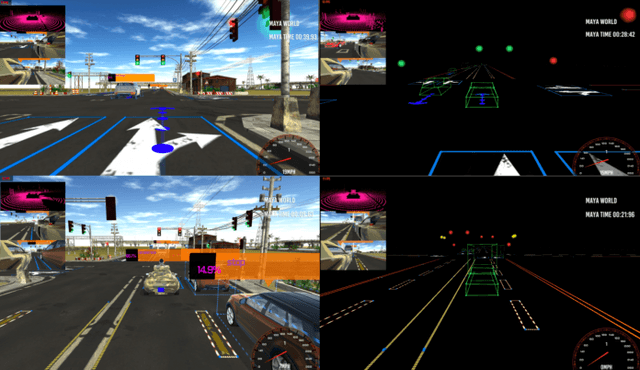
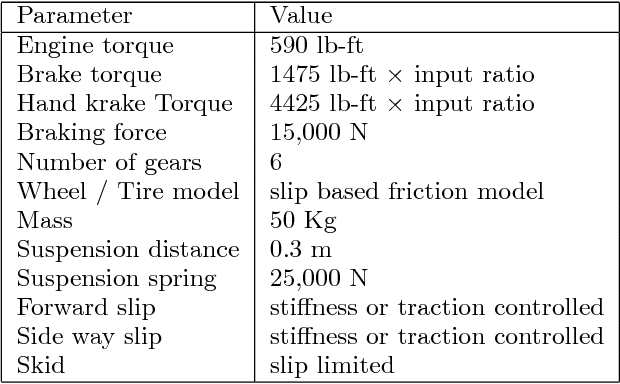
Predictions of driver's intentions and their behaviors using the road is of great importance for planning and decision making processes of autonomous driving vehicles. In particular, relatively short-term driving intentions are the fundamental units that constitute more sophisticated driving goals, behaviors, such as overtaking the slow vehicle in front, exit or merge onto a high way, etc. While it is not uncommon that most of the time human driver can rationalize, in advance, various on-road behaviors, intentions, as well as the associated risks, aggressiveness, reciprocity characteristics, etc., such reasoning skills can be challenging and difficult for an autonomous driving system to learn. In this article, we demonstrate a disciplined methodology that can be used to build and train a predictive drive system, therefore to learn the on-road characteristics aforementioned.